About Me

My photo
Allahabad, Uttar Pradesh, India
Blog-Advisor -: Dhananjai Chopra(Course Coordinator,CMS,IPS,AU), Founding Blog-Manager -: Prateek Pathak....
Showing posts with label University of Allahabad. Show all posts

Friday, December 6, 2013

Former South African President Nelson Mandela dies


Former South African President Nelson Mandela has died at the age of 95 after a prolonged illness.
The lion of South Africa sleeps forever tonight.

Nelson Mandela, who led the fight against apartheid and then pushed for reconciliation as his country’s first black president, died after a prolonged illness Thursday. He was 95.

“He passed on peacefully in the comfort of his family,” South African President Jacob Zuma said in an address to the world just before midnight Thursday in the African nation. “We’ve lost our greatest son.”


 As word of the death of the man South Africans called Madiba spread across the heartbroken country, hundreds of weeping mourners converged on Mandela’s home in Johannesburg, chanting, “Viva Mandela, viva!”

Fittingly, blacks and whites mourned Mandela together.

“If it wasn’t for Mandela, I wouldn’t be chilling with my black friends,” said 19-year-old Dominic Sadie, who is white and was part of the giant crowd of people holding candles and paying their respects. “I love him.”

Mandela died at 8:50 p.m. local time, but Zuma didn’t make his sad announcement until a little before midnight.
Weeping South Africans raced out into streets in their pajamas, including one black mom who rushed over to Mandela’s house with her two daughters.
“I am glad that he is in a better place, but I hope South Africans will be able to deal with his death,” she said through her tears.

Mandela shared the Nobel Peace Prize in 1993 with F.W. de Klerk, South Africa’s last president during the era of state-sanctioned racial segregation.
“I liked him and I immediately felt that this is truly a man of greatness,” de Klerk recalled. “I think Nelson Mandela’s legacy is don’t be bitter about the past, take the hands also of your former enemies.”


In Washington, President Obama said Mandela “no longer belongs to us, he belongs to the ages.”

“I am one of the countless millions who drew inspiration from Mandela’s life,” Obama said at the White House. “So long as I live, I will do what I can to learn from him.”


Obama ordered that flags be flown at half-staff until sunset Monday and prepared to fly out to South Africa for a state funeral.

Prateek Pathak 
Alumni Student
B.A in Media Studies
University of Allahabad

Wednesday, August 29, 2012

Review of ‘Yeh Jo Hai Pakistan’ – book by Shivendra Kumar Singh…!


In this book ‘Yeh Jo Hai Pakistan’ writer  Shivendra Kumar Singh has written his memories about his tours to Pakistan while covering Indian Cricket Team. He is one of the most famous sports journalist in India. He started his career from his hometown Allahabad with print media and then shifted to the media hub Delhi and worked for zee news, star news and now he is a special correspondent with ABP news. 


In this book the title simply reflects that this book is related to the favorite debate topic of Indians i.e. Indo-Pak. But it is new as it is in cricket prospects and well as the ambiance of our neighbor country. It is a reflection of his visit to Pakistan with the Indian Cricket Team in captainship of legendary Saurav Ganguly . It was in the year 2004 when the Indian cricket team was in Pakistan after a break of 14 years. It was a wonderful experience not only for master blaster who started his career with Karachi- which is known as Bombay of Pak.

The writer expresses how he tried to chat with Tendulkar but stopped by the security. Since it was an Indian team security was very tight. While reading this book I must articulate that this is a very interesting book and we all know Indo-Pak is the favorite topic of every Indian right from the childhood. The tittle and initial pinch of the book is the panorama of his views and definitely attracts readers.

Sachin Tendulkar-Master Blaster was the only player in the team to have played in Pakistan before 2004.As we know the team went there after a long break. It was at this stadium in Karachi that Sachin also began his career. So like every player it was a good flashback for Tendulkar. Then came March 13, the first One Day against Pakistan. The National stadium was jam packed. The last over remained and Pakistan needed nine runs to win. Sourav handed over the ball to Ashish Nehra. India won that breathtaking match.

The flow of the book is very interesting. The day after the match, former Pakistan captain Zaheer Abbas invited journalists  for a dinner at his place. The writer expresses how on their way back, they  wanted to see the Karachi beach. Their taxi driver took them  to the beach. Until then he  does not remember visiting a beach before even in India. In no time he has shown his journalistic mind and he called his cameraman, they  took some shots and bytes from the perspective of cricket, security measures and the fast reaching waves of modernization in Karachi, and above all with an outlook of increasing the popularity of Indian cricket stars in Pakistan. The Indian team visited after 14 years and that too only stayed for a few hours in Karachi. That left people only wanting more as they could not even catch a glance of their favorite stars. Their story was ready. They wanted to experiment. He concluded the PtC with a poetry: “Umre daraz maang kar laaye thay char din - do aarzoo mein kat gaye do intezar mein”. At this point I must express that Writer singh’s PTC are very interesting and nice to hear. He still remembers that he  did not have much luggage while going to Pakistan, as the trip drew to a close and he landed at Delhi airport and was full of baggage- Partly due to his shopping and the fairly large number of gifts that he received from the people in Pakistan. The love and emotions behind the gifts outweighed his urge to refuse them. It would have been impolite too. The acts of gifting started in Karachi only when a friend’s Abba gave him a shawl and a trinket box saying “Son keep this as a souvenir from us, we will always be in your memories.” The box still occupies a place in his home and has been passed on to the next generation - his wife would keep her jewelry in it and now his daughter keeps her anklet their.


Writer Singh visited again in 2005 and 2006 and included these two experiences too in this book.  In 2005, the most beautiful memory he recalls is meeting the great cricketer Hanif Mohammad. When they  reached, the door was closed. Writer pressed the doorbell and Hanif Mohammad came out. They  introduced themselves, apologized for visiting uninformed and earnestly requested for an interview. The writer writes meeting Hanif  was like turning the leaves of Pakistan’s cricket history .  One would be amazed to know that of the first 100 Test matches played by Pakistan, there was not even one in which a member of Hanif Saheb’s family was not a part. The writer started the interview. Instead of putting forth questions to him, he humbly requested him to share anecdotes from his life. Hanif saheb shared how in his childhood days his ammi and abba would dress him like a girl: he would wear a frock and bangles too! I was an attentive listener while he recalled. This experience definitely connects readers as most of us have experienced an identical thing in our lives.

In 2006 when writer again visited Pakistan, he had a chance to visit Karachi third time. Even though the Indian team had lost the test match in Karachi, Irfan Pathan marvelled at taking a hat trick in the first over of the match. Later, the ties between India Pakistan turned unpleasant. The writer  has a great memory of playing a match against Karachi journalists, they  tried their  hands at cricket and the venue they chose was Mohamad Ali Shah Stadium. They played at the ground though writer injured his finger trying to take a catch for which his colleagues still have a great laugh together about it.
The writer has expressed how Karachi’s food was good, a bit spicy and oily. But, once he was familiarized with the city he got the food of his choice. He still have a strong desire to visit Pakistan with his family. To meet all those who gave him so much love that if he have to speak on Pakistan and its people He says he would need days to finish. Good or bad, He remembers every moment spent in Pakistan. As a journalist, the stories that he did he remember the backdrop of each piece. He recalls the streets and road.  He remembers Pakistan.  

Not only all this, the book have some interesting chapters featuring instances of the greatest cricketers of both countries like Inzamam-UL-Haq, Shoib Akhtar, Sachin Tendulkar, Saurav Ganguly, Dhoni etc.

I am sure since the writer has experienced all this in front of himself, his eyes must be in tears while writing at the end about SriLankan Team tour in 2009 and controversy related to it. It was certainly a black day as a writer puts it.  And on the other hand with the hope to write his next book when Indian team visits Pakistan again.

Certainly this book is a must read book. Very Interesting, good flow, excellent language and the novel bond which we discover between Indo-Pak after reading this book is superb. 


Prateek Pathak 
Student
B.A in Media Studies
University of Allahabad
Thursday, May 31, 2012

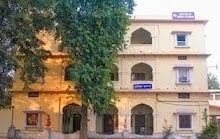
Release of Student's Journal for Media Literacy


इलाहाबाद विश्वविधालय के सेण्टर आफ मीडिया स्टडीज में हिन्दी
पत्रकारिता दिवस के अवसर पर बी00 इन मीडिया स्टडीज के विधार्थियों द्वारा ''स्टूडेण्ट जर्नल फार मीडिया लिट्रेसी के दूसरे अंक का विमोचन समारोह आयोजित किया गया तथा इस अवसर पर विधार्थियों द्वारा तैयार की गयी र्शाट फिल्म दिखार्इ गयी। मीडिया रिसर्च सेल के निर्देशन में तैयार किये गये ''स्टूडेण्ट जर्नल फार मीडिया लिट्रेसी में पत्रकारिता के गिरते मूल्य और उसकी चुनौतियों, टीआपी के खेलनक्सलवाद और सरकार की भूमिका, 4-जी नेटवर्क तथा फोटोग्राफी से जुड़े आलेख  शामिल किये गये हैं। इसके सम्पादन में जिन विधार्थियों ने भूमिका निभार्इ है उनमें रिचा तिवारी, प्रतीक पाठक, सौरभ अग्रवाल, जनार्दन पाण्डेय, जया पाठक, अपराजिता बासुब्रजेश मिश्रा और संचित अग्रहरि शामिल हैं। इसी अवसर पर पी0जी0 डिप्लोमा इन फोटोजर्नलिज्म एण्ड विजुअल कम्युनिकेशन के विधार्थियों का विदार्इ समारोह भी सम्पन्न हुआ। कार्यक्रम के दौरान सेण्टर इंचार्ज सुनील श्रीवास्तव, कोर्स कोआर्डिनेटर धनंजय चोपड़ा तथा अध्यापकगण एस0के0 यादव, विधासागर मिश्र, सचिन मेहरोत्रा, प्रिया मनीष कुमार, अमित मौर्या, राकेश त्रिपाठी आदि उपसिथत थे।


Tuesday, April 24, 2012

Why APJ Abdul Kalam should not be the next President of India?


 The debate in the country over who would, or should, be the next President of India after Pratibha Devi Patil completes her tenure in July is touching the height of temperature. Every political party apart from the major two, the Congress and the BJP, has started communicating its outlooks, and most seem to be swerving around to at least one spot – the new individual for the job should be apolitical, beyond partisan politics, and non-controversial. I might also add cherished, loved, looked up to and possessing an impeccable quality among the qualities. Moreover, it is the newspapers, news channels, or the new media tools every where the hot topic is the next President.

As the analization shows, the two major parties clutch their cards close to their coffers, it might not mean much as neither of them has the figures to sway the result. In a way, that is great, for we know what can be wreaked upon us in circumstances where one party calls the inoculations and has all the figures.


The enlargement is stirring, undoubtedly, and gratitude to the social media, there is intense debate and discussion on what and who the next head of state should be. Among the number of names being thrown around, the name of the former President APJ Abdul Kalam has been the most in strife. Would Kalam making it back as the resident of Rashtrapati Bhavan. It is tuff to figure it now since it is a big prospect in the biggest democracy of the world.

In March I got the golden chance to meet Kalam in a function at Allahabad. (Thanks to Dhananjai Chopra,CC of my centre) When I heard that yet again name of Kalam is at the top position for the President I was pleased. But I have a different outlook on this. On one hand, at least one powerful party may not let that happen. More prominently, howsoever good Kalam was as President, and there is no hesitation that he was effortlessly the most esteemed and non-political chap we have had, I find it very gloomy that we have to even foster opinion of calling him out of retirement to be our President yet again. No, I am not saying Kalam is flabby for the job, for he was a astonishing ambassador of India, but do you see the catastrophe in this? A nation of over a billion people, do we have such a liquidation of human resources, leadership that we cannot find another who is laudable enough to dwell in, the utmost office and possesses the qualities mentioned earlier? It is gloomy, isn’t it?


After this different view one may ask again why not Kalam? I am in no doubt to articulate that from the names in the run Kalam is certainly the best. But folks please try to understand we cannot find another Kalam? If we can find ‘missile-woman’ after ‘missile-man’ we can certainly find an able candidate who can work with the dedication like Kalam. A big example to proof my view is E Sreedharan who had resigned following a key Metro construction accident in July 2009. At that occasion many sections from the media had argued-Should Sreedharan be allowed to go?. Since Sreedharan knew how the system works and has always delivered and given that the Commonwealth Games were round the corner, we needed him there to supervise the work. But other than that, it again pointed to our liquidation that we had to depend so deeply on a personality and couldn't find someone precious enough to swap him.


For a country that frequently desires to be among the world superpowers, provide me a favor to understand the nation is only as good as its human assets. It may sound too rounded, but the verity remains that we have a lot of workers and no leaders. Lack of suitable leadership and leaders would foil every endeavor or hallucination of turning out a nation that the world looks up to.

I might be wrong with this different point of view and would not be surprised when I will see visuals of Kalam entering as the resident of Rashtrapati Bhavan. Lastly certainly I  could be criticized but one thing is very clear i.e. why cannot we produce a leader like Obama?    


Prateek Pathak
Student
B.A in Media Studies
University of ALlahabad

Tuesday, November 22, 2011

Will you eat your Physics, Chemistry or Engineering Degree?


                                                        ‘My interpretation on sustainable development is that the development which result in social harmony not social unrest. Handful are richer more are poor what type of technology is it. 75% commoners are only earning 20 rupees per day. Eating ratio in a day has decreased in this last decade. Problem is unemployment. You will eat your physics, chemistry or engineering degree?  When jobs are not there what is it to pass out from famous institutes. You should have knowledge of economy to solve these problems, technology would not solve. We have to introduce technology in agriculture. Government policies in the urban centers should be reversed. Problem is how to raise purchasing power. We can increase the production of say steal or chemicals, but the major problem is how will we sold. You should increasing purchasing power in urban areas. Farmers should become more prosperous. Unless farmers will not make profit how will they buy industrial good? Because of low purchasing power manufacturing jobs are also declining. At present prices are skies rocketing. Every parent wants to see their kids in IIT, but it cannot be true. ’- these lines were delivered by Justice Markandey Katju, Chairman, Press Council of India, who was the Chief Guest in inaugural function of Golden Jubilee Conclave on Technology For Sustainable Development.


                                        At the M.P hole of Moti Lal Nehru National Institute of Technology, Allahabad the function started by the lecture of Guest of Honour, Dr. Santosh Mehrotra, Director General, institute of Applied Manpower Research, Government of India. He started by saying number of poor have not decline Young people should be used for the development of the nation. We should use technology for sustainable development. Water table is declining. Only 40% land is irrigated 60% depends on rain.  Why manrega in the country is so important because it is creating asset which will save rain water. As we grow we would industrialize, we need land for that. Mining in unplanned manner is there both in legal and in-legal manner. You can’t go on displacing Adivasi. We have no action plan for climate change. China is 20 years ahead of us because it relied on solar, pekoe micro hydra. We can take the example of Allahabad where there is electricity in most of the houses but there is a 6-8 hours power cut. I would like to challenge the youth how solar can be used. He concluded by words of Mahatma Gandhi- ‘If you want to see change be that change.’


                   The conclave had the invited lectures by some of the prominent experts. This includes personalities like Prof G.K Rai, Director, Institute of Professional Studies, University of Allahabad who delivered his lecture on Technology and Sustainable Development-finding our way out. He started by saying there is no harm if we are adopting western model. We cannot desire that a small kid will have the deep knowledge of culture. One and all cannot be a scholar. He also compared America and Africa and showed some analytical statistics. He concluded by saying ‘Poor man can be rich in terms of happiness’.


                        Other speakers were Prof K.S Rao, IIT, Delhi who spoke on Sustainable Infrastructure Development, Prof D.K Srivastava, Director, Madras School of Economics, Chennai, who spoke on Sustaining India’, Prof Kiran Seth, IIT, Delhi, who spoke on India’s Core Competence, Dr. G.N Pandey, who spoke on Nuclear Energy for national development, Prof Chandan Ghosh, NIDM, Delhi who spoke on Sikkim Earthquake 2011, Prof. S.K Joshi, NPL, Delhi who spoke on Sustainable Development-Needs a realignment of engineering education, Prof D. Bandopadhay, Vice Chancellor, GGIP University, New Delhi who spoke on Sustainability in the paradigm of Management & Policy, and Prof M.M Pant, who spoke on Education and Sustainable development.


                                   The conclave had many students and faculty members of different colleges of Allahabad. The conclave’s inaugural function was preside by Prof. P Chakrabarti, Director, Moti Lal Nehru National Institute of Technolgy, Allahabad. 


Prateek Pathak
Student
B.A in Media Studies
University of Allahabad